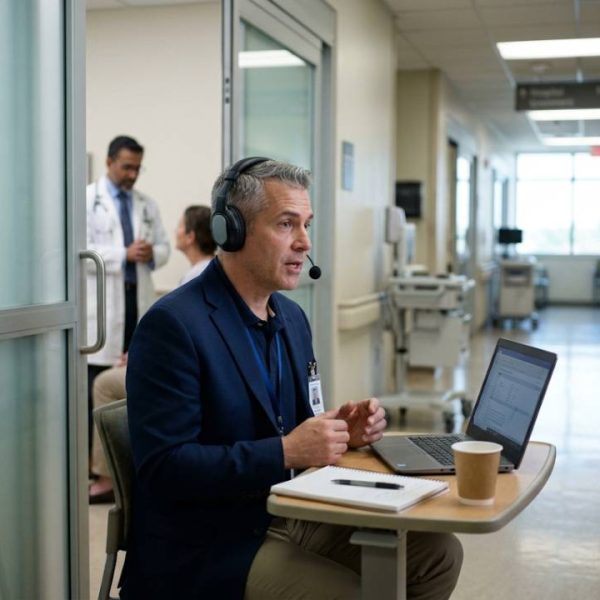
When a patient and a clinician do not share a language, every sentence carries weight. A missed word about a dose, a symptom or a consent form can change a treatment. English to Chinese interpreting in a hospital is therefore a skilled profession, not a favor that a bilingual relative can provide.
Why family members are not the answer
It is tempting to ask a bilingual relative or colleague to help. They mean well, but they often soften bad news, skip details they find embarrassing, or add opinions of their own. They also rarely know medical terminology in both languages.
A trained interpreter conveys everything that is said, and nothing that is not. That impartiality protects the patient and the clinic.
Mandarin, Cantonese and written forms
Chinese is not a single spoken language. Mandarin, Cantonese, Shanghainese and other varieties are not mutually understandable. Before booking, ask the patient which one they prefer, and confirm whether written materials should use Simplified or Traditional characters.
Simplified Chinese is standard in mainland China and Singapore, while Traditional Chinese is used in Taiwan, Hong Kong and Macau. Sending the wrong script to a patient looks careless and may reduce trust.
Consecutive or simultaneous
Most medical encounters use consecutive interpreting. The speaker says a few sentences, pauses, and the interpreter renders them. This keeps the conversation natural and allows time for questions.
Simultaneous interpreting, with the interpreter speaking while the speaker continues, suits conferences, group briefings and some court hearings. It needs equipment and usually two interpreters working in turns.
Brief the interpreter beforehand
Ten minutes of preparation raises quality noticeably. Share the purpose of the visit, the diagnosis if the patient consents, and any specialist terms likely to come up. If documents will be discussed, send them in advance.
Agree on a few ground rules. The clinician speaks directly to the patient, uses short sentences, and avoids idioms. The interpreter may stop the conversation to clarify a term.
Terminology matters
Chinese medical vocabulary combines modern scientific terms with traditional concepts. A patient may describe symptoms in terms that do not map neatly onto Western categories. A good interpreter explains the difference rather than guessing.
Keep a bilingual glossary for repeated cases such as oncology, cardiology or prenatal care. It saves time and reduces mistakes, especially across several appointments.
Privacy and ethics
Interpreters follow a code of confidentiality similar to that of clinicians. They must not share what they hear, accept gifts, or offer personal advice. Make sure your contract with the provider states these rules clearly.
For telephone or video sessions, use secure platforms and tell the patient who is on the line. Never let an unknown third party listen in.
Choosing a provider
Look for credentials, experience in your specialty, and clear procedures for emergencies. A reliable provider of interpreting services can supply trained interpreters for on-site, phone and video sessions, and can match the right language and dialect to each patient.
Written materials also need care
Consent forms, discharge notes and prescriptions should be translated by qualified linguists, not machine tools. Our article on medical document translation explains which documents need translation and why accuracy cannot be left to chance.
Understanding language access rules
In many countries, patients with limited English proficiency have a legal right to language assistance. In the United States, the HHS guidance on limited English proficiency explains obligations for healthcare providers receiving federal funds, including when interpreters must be offered free of charge.
Remote interpreting options
Phone and video interpreting fill gaps when no on-site interpreter is available, especially for rare dialects or urgent visits. Test the connection before the appointment, make sure the patient can see and hear clearly, and keep the session short and focused.
Video is better than audio alone because gestures and facial expressions help both sides. Use a quiet room, a headset and a stable connection to avoid repeated requests to repeat sentences.
After the appointment
Ask the interpreter whether anything was unclear or whether the patient seemed confused. Interpreters often notice cultural cues that clinicians miss, such as hesitation to ask questions or concern about cost.
Provide written instructions in the patient's language, and confirm the next appointment with the same interpreter when possible. Continuity builds trust and speeds up each visit.
Cultural awareness in the consultation room
Some patients prefer to discuss serious diagnoses with a family member first. Others may nod politely without understanding. Respectful questions such as asking the patient to explain the plan in their own words help confirm comprehension without causing embarrassment.
Allow extra time for the appointment. An interpreted visit takes longer, and rushing leads to errors.
Common mistakes to avoid
The first is not booking early enough, which leaves staff relying on whoever is available. The second is skipping the briefing. The third is speaking to the interpreter instead of the patient. Each is easy to correct with a short checklist.
Closing thoughts
Good interpreting protects patients and builds trust. Choose the right dialect, brief the interpreter, support written materials with professional translation, and keep the focus on the person in the room.
Spoken interpreting in hospitals shows how much accuracy matters when people act on information immediately. The written equivalent is a translated manual or discharge instruction, where technical translation services help keep terms precise and readable. Clear wording reduces the risk that a patient or technician misreads a step. That precision protects both safety and confidence.
Technology is starting to support interpreters in settings like these. Smart glasses that translate speech in real time can help a clinician handle quick exchanges, directions and simple questions when no interpreter is in the room yet. Coverage of how these wearables perform in practice, under the banner of translation and interpreting services, shows both their promise and their limits. They are an aid for low-risk moments, not a replacement for a trained medical interpreter when diagnosis and consent are at stake.